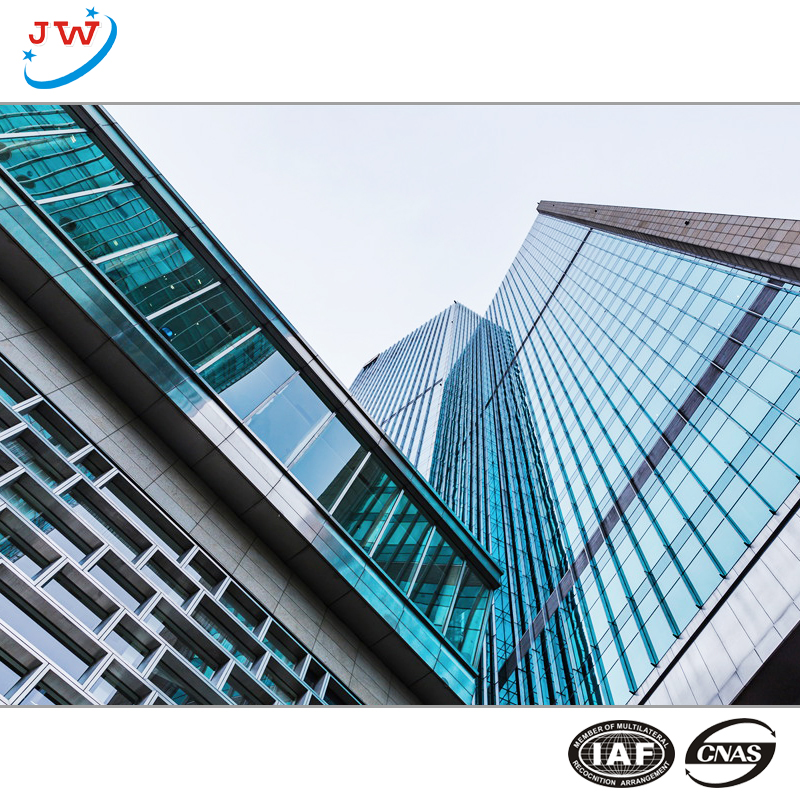
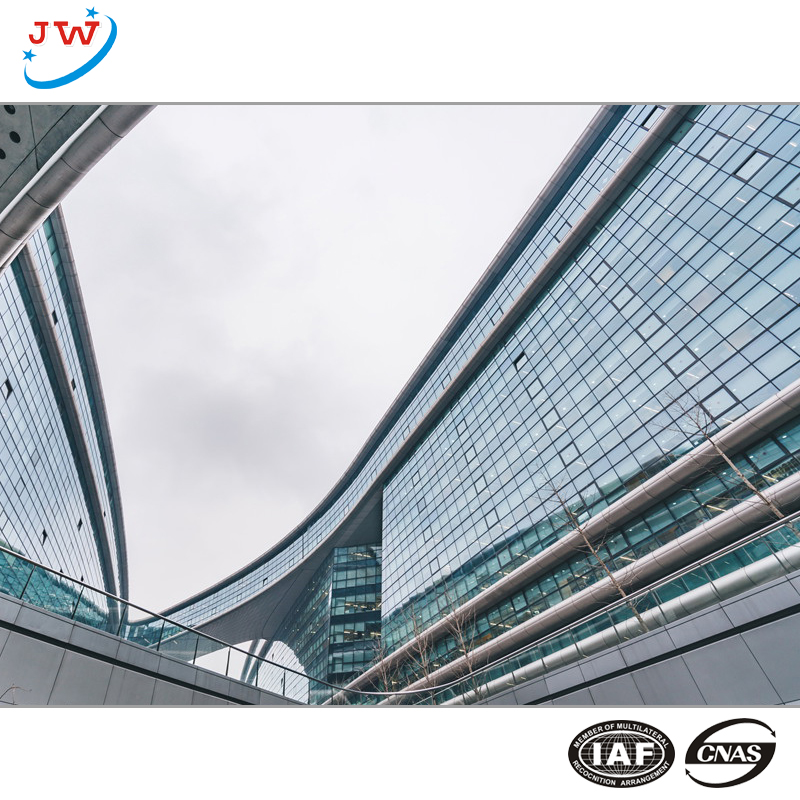
Glass curtain walls are lightweight aluminum-framed facades housing glass or metal panels. These glazing systems don’t support the weight of a roof or floor. Instead, gravity loads and wind resistance transfer from the surface to the building’s floor line.
Curtain glass wall are often part of a building envelope or comprises one part of a wall system. Each glazing system requires careful integration with other adjacent structural elements such as wall claddings, roofs, and wall details.
Glass curtain wall building systems an advantage is that natural light can penetrate deeper within the building. The curtain wall façade does not carry any structural load from the building other than its own dead load weight.
The wall transfers lateral wind loads that are incident upon it to the main building structure through connections at floors or columns of the building. A curtain wall is designed to resist air and water infiltration, absorb sway induced by wind and seismic forces acting on the building, withstand wind loads, and support its own dead load weight forces.
glass curtain wall
glazing curtain wall
people also ask:1.Definition of glass curtain wall
2.Frame curtain wall and unit curtain wall difference
3.Future development direction of high-end curtain wall glass for architecture
4.Talking about fireproof glass curtain wall
5.Glass curtain wall inspection
6.What are the advantages of installing glass curtain walls
7.What is the difference between the glass curtain wall and the hidden curtain wall
8.What Are The Advantages And Disadvantages Of Full Glass Curtain Wall
9.How To Install The Glass Curtain Wall Residential House
10.What Kind Of Structural Glass Curtain Wall Has Beautiful Design And Energy Saving
11.What Is Double Glass Curtain Wall
12.What Is Led Glass Curtain Wall
13.How Can Glass Curtain Wall Effectively Avoid Building Light Pollution
14.Why Do Tall Buildings Need Curtain Walls
15.What are the different forms of the glass curtain wall